
Blog AINA Tech
Practical templates, guides, and expert insights — created by practitioners, for real hiring teams
How a Mobile App Studio Cut 136 Recruiter-Hours Per Hire — Without Replacing a Single Tool
Here is the part nobody talks about in “AI transforms hiring” articles: sometimes the problem is not that your process is broken. It is that your process works — it just eats your team alive. That was the situation at a mid-size mobile app studio based in Eastern Europe. Founded in 2018, the company had grown steadily, shipping apps across multiple verticals. By the time we spoke with them, they were running one to six open roles at any given time — roughly 45 per year. Continuous, unrelenting hiring. The kind that does not make headlines but quietly determines whether a product ships on time. They had two recruiters. Two people whose entire professional lives revolved around moving candidates through a funnel of 180 resumes per vacancy — writing messages, triaging CVs, scheduling screenings, syncing with hiring managers, and sending 179 politely worded rejection letters for every single hire.
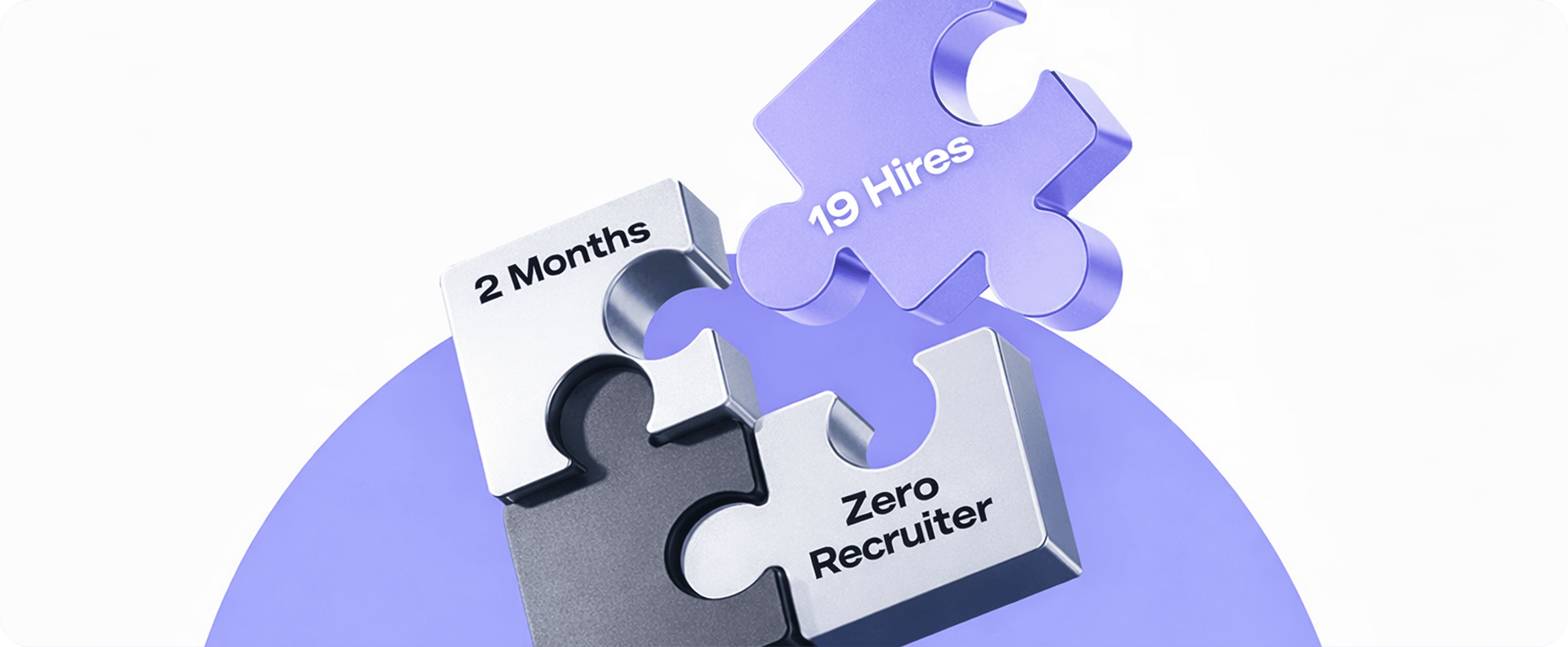
How a Gamedev Studio Eliminated Their Part-Time Recruiter and Still Hired 19 People in Two Months
This story starts with a referral — and that matters, because the best proof that something works is when one customer sends you another. A small game development studio heard about AINA through another gamedev company they knew. That other studio was already on an annual AINA subscription. No sales pitch needed. Just one founder telling another: “This thing actually works.” The studio that walked in had a familiar problem. They build games — think Unity 3D, C# developers, the kind of technical roles where finding the right person requires sifting through hundreds of applications to surface the few who can actually ship. They had been using a part-time recruiter, but the arrangement was painful. Different time zones. Slow response loops. Everything dragged. A role that should close in two weeks took longer because the coordination overhead — messages, scheduling, resume reviews — sat in someone’s inbox across a timezone gap.
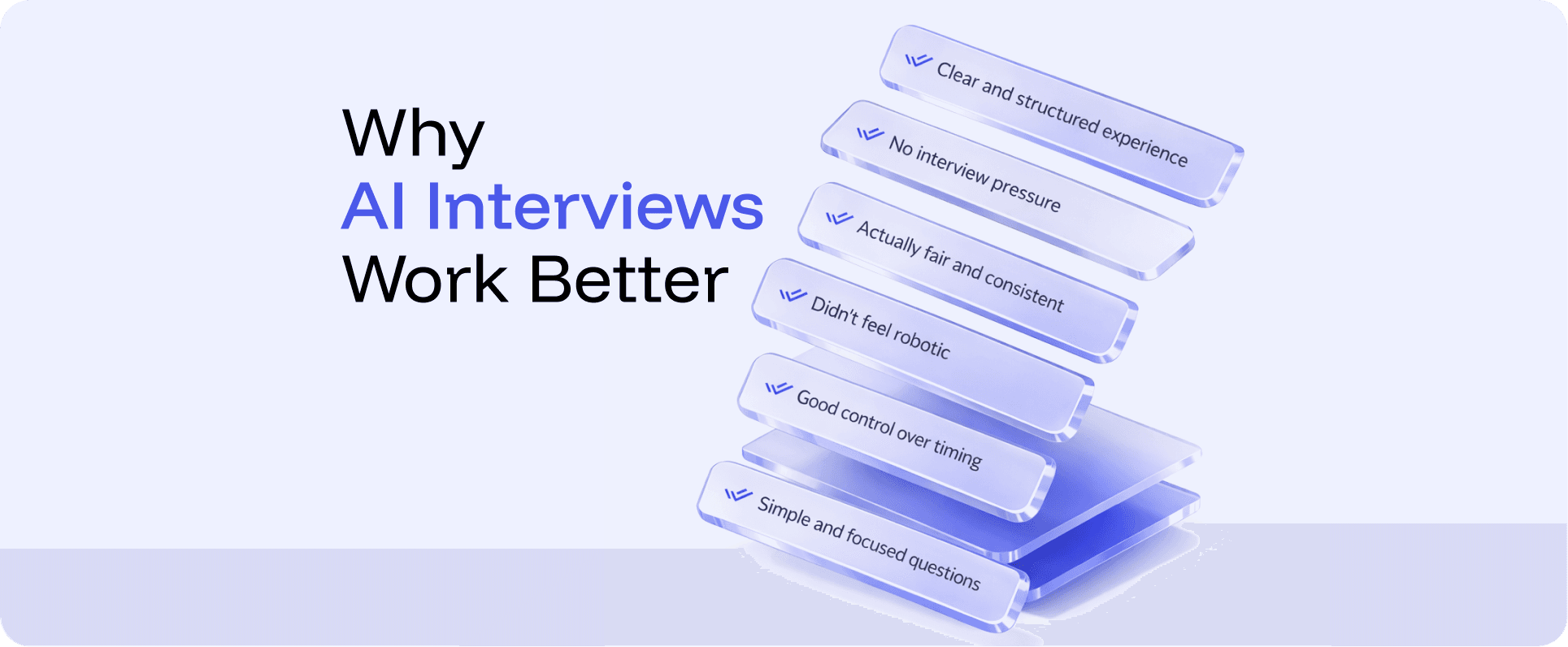
Why AI Interviews Work Better Than You Think — And Why We Made Ours Optional
The hiring world is split: some swear AI interviews are the future, others say they're dehumanizing. We've been on both sides. Here's what we actually learned. Let's start with what everyone's thinking but few say out loud: "AI can't interview people. It's a bot. It doesn't understand nuance, body language, or culture fit."
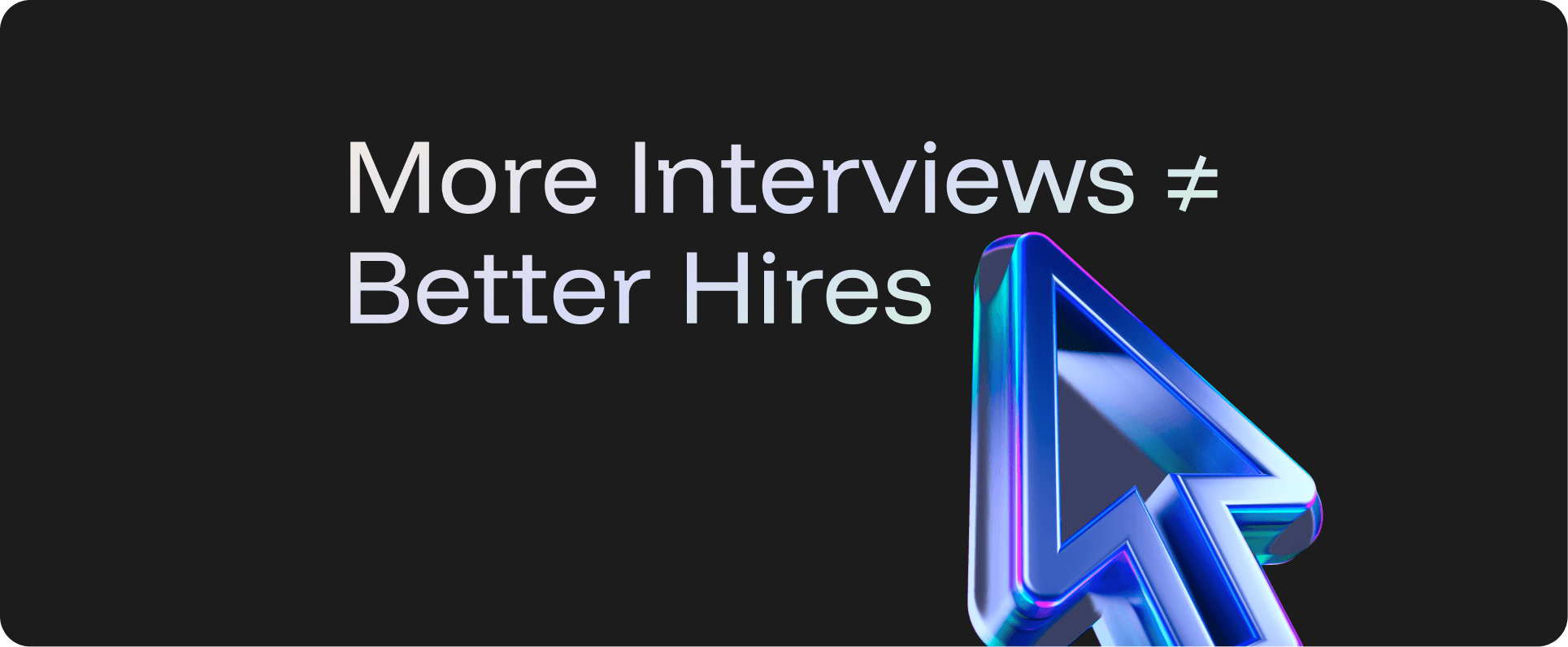
Your Calendar Is Full of Interviews. Your Hires Still Disappoint. Here's What's Actually Broken
Your calendar is stacked with interviews. Your recruiter is drowning in resumes. You're still making bad hires. The problem isn't effort — it's that effort is going to the wrong places. When hiring managers spend 5–6 hours per role just interviewing, recruiters burn 52% of their time on admin, and 30% of new hires leave within 90 days, the system isn't slow — it's structurally broken. More interviews won't fix it. Better signal will. AINA replaces the manual chaos with a structured workflow that screens faster, surfaces better candidates, and gives hiring managers their calendar back — without removing them from the decision. Here's what a typical week looks like for a hiring manager at a growing company: 4–6 interviews, each 45–90 minutes. Prep time before. Debrief after. Feedback that may or may not get written down. Multiply that across 3 open roles and you're looking at 15–18 hours a week — nearly half your working time — spent in interviews. According to LinkedIn's analysis of US hiring data, a company hiring 100 people per year burns roughly 1,700 hours on interviews alone — the equivalent of one person working full-time for 10 months doing nothing but interviewing. For a hiring manager personally, that's 5–6 hours per role just on candidate conversations, plus follow-up discussions and alignment meetings.

Hiring Outside Your Expertise: How Any Team Can Confidently Fill Roles They Don't Understand
The problem: Every growing company eventually needs to hire for a role nobody on the team has done before. When that happens, you either overpay an agency, spend weeks guessing — or use a system that gives you the domain expertise you're missing. There's a version of hiring everyone talks about: you need more of what you already have. More developers. More salespeople. More of the role your team knows inside out. Then there's the other kind: the hire that doesn't fit your playbook.
How a Growing Restaurant Group Cut Hiring Time by 3x — and Eliminated Bad Hires
A restaurant group expanding across the Mediterranean was hiring front-of-house staff — experienced waiters and service professionals — for its fine-dining and upscale-casual locations. The requirements were specific: candidates needed verified hospitality experience at reputable venues, conversational-to-fluent English, valid work documentation, and willingness to relocate. The hiring manager had been in the market for two years. The pattern was always the same.

How to Scale Hiring Without Losing Your Quality Bar
When you scale hiring, quality drifts. More interviewers, more roles, more inconsistency. The fix isn’t faster hiring — it’s making judgment repeatable. Structured rubrics, scorecards, and a decision trail let you add interviewers without diluting the bar. AINA layers this workflow infrastructure on top of your existing ATS so every hire gets the same rigor, whether the founder is in the loop or not. Time savings follow naturally, but they’re secondary. Most hiring content focuses on speed. Reduce time-to-fill. Automate outreach. Move faster. And sure, speed matters — the SHRM 2024 Human Capital Benchmarking Report puts the average US time-to-fill at 44 days, and every extra week costs you candidates. But if you talk to founders who’ve scaled from 10 to 80 people, the complaint isn’t usually “we hired too slowly.” It’s “somewhere around hire 30, we started making bad calls.”

Your ATS + GPT Is Already Good. The Obvious Win Is Removing the Copy/Paste Tax
You don’t need a new ATS. You don’t need to hand hiring to a chatbot. The biggest ROI in recruiting ops right now is automating the artifacts you already produce manually — JDs, screening questions, candidate summaries, rejection letters, offer docs — inside the workflow where they belong, with guardrails and an audit trail. The math is simple: a single hire generates 10+ artifacts, each taking 10–50 minutes of copy/paste/reformat work. At $44/hr fully loaded (US), that adds up fast. A workflow automation layer like AINA can save over 130 recruiter-hours per hire and pay for itself on the very first hire. Here’s the pattern: a new tool launches, leads with “AI interviewer” or “autonomous recruiter,” and immediately triggers every reasonable objection about bias, candidate experience, and legal risk. Meanwhile, the most painful part of a recruiter’s week has nothing to do with interviewing. It’s the repetitive artifact production — drafting JDs, triaging 180 resumes, writing 108 candidate messages, sending 180 rejection letters — that eats 60–70% of recruiter time on tasks that are procedural, not strategic.